Signal by Rethink SparkBeta
Analyse your IQ captures.
Spectrum, measurements, demodulation, and bit inspection.
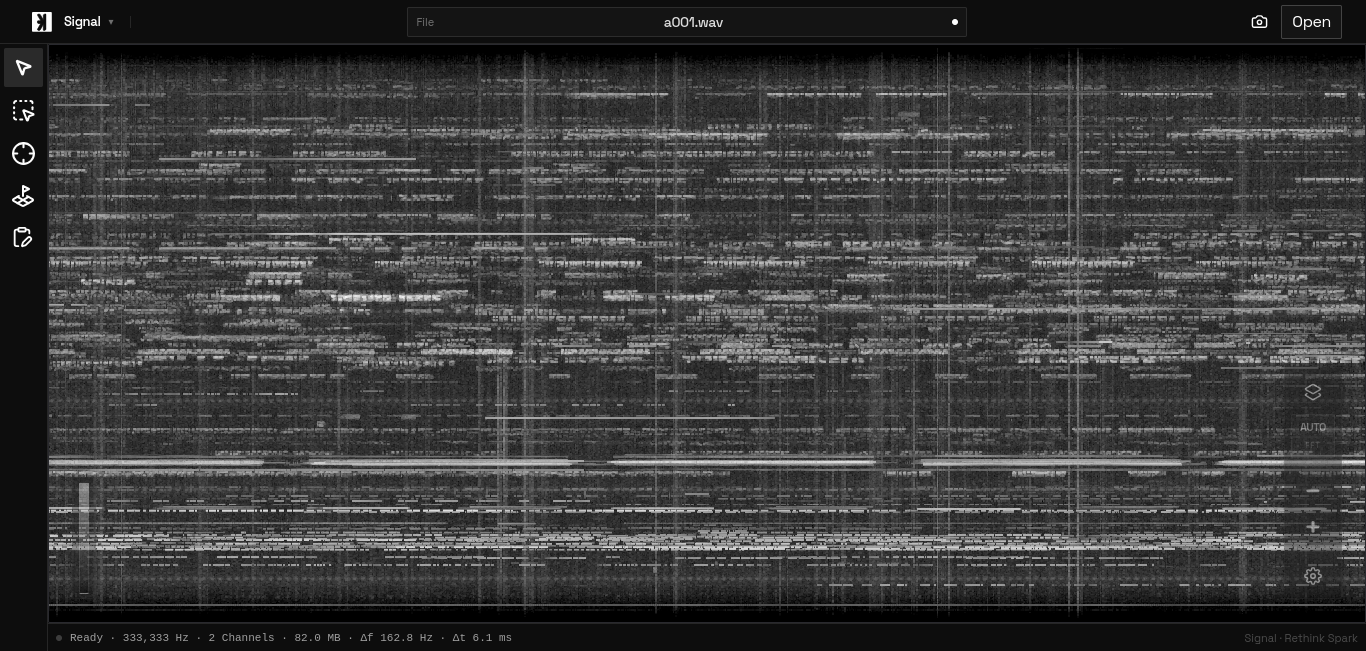
Open, explore.
An IQ recording is the starting point: one signal, several signals, noise, carriers - or something you cannot name yet.
Browse the spectrogram, zoom in, select a zone in time and frequency, name it, annotate it. No need to know what it is to start.
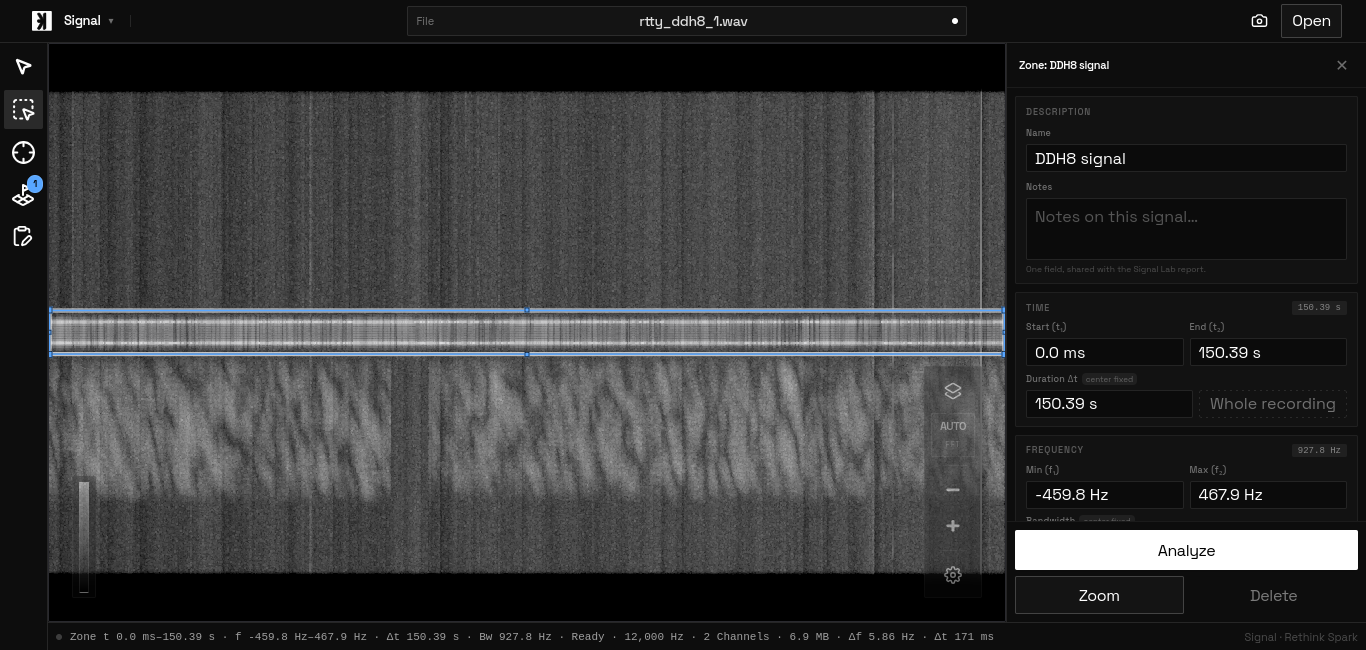
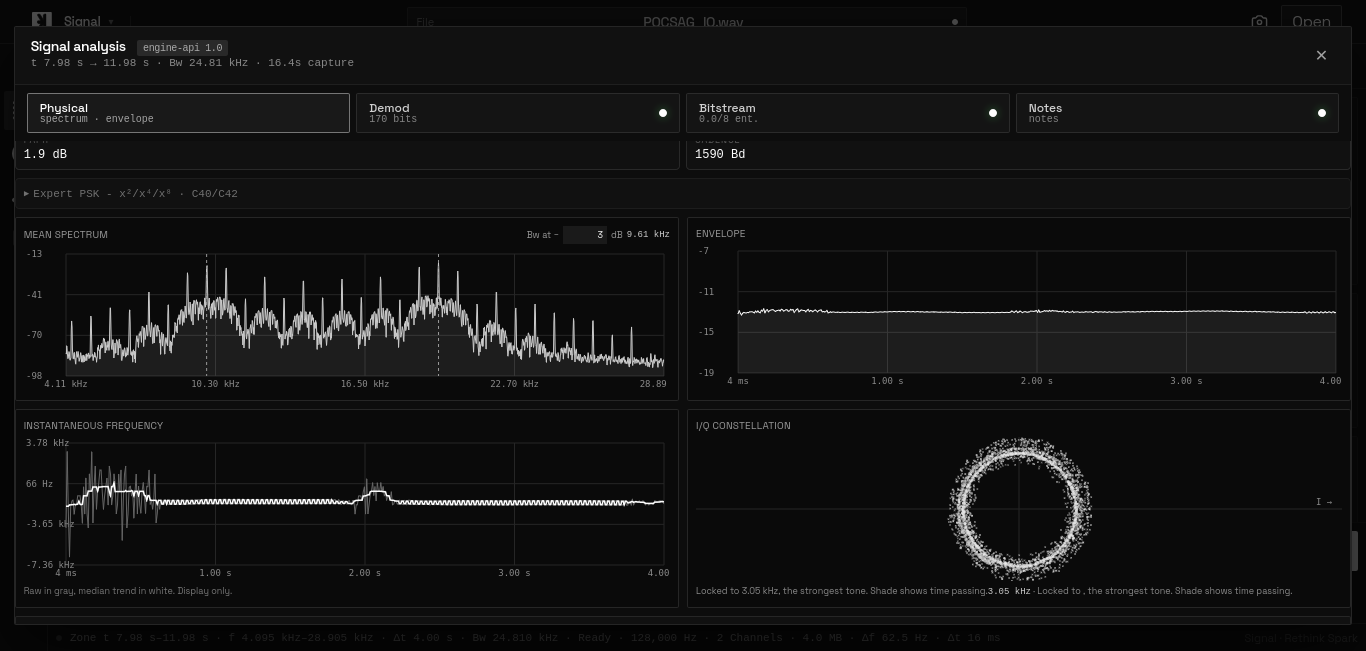
Measure before interpreting.
SNR, noise floor, carrier frequency, bandwidth, power, envelope, instantaneous frequency - measured on the selected zone.
These values describe what is observed. On their own, they are not an identification.
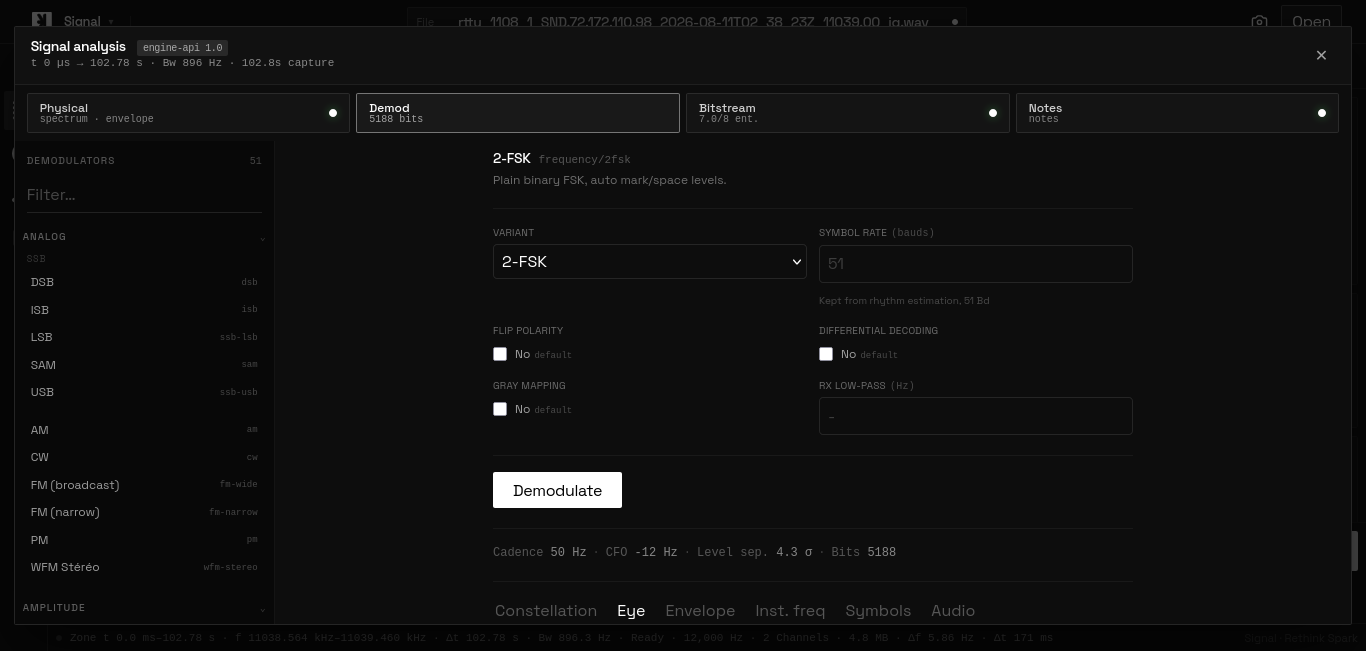
Demodulating is transforming.
Choose the method, set its parameters, examine the result.
A demodulation is a transformation, not an identification. It does not say which protocol is present.
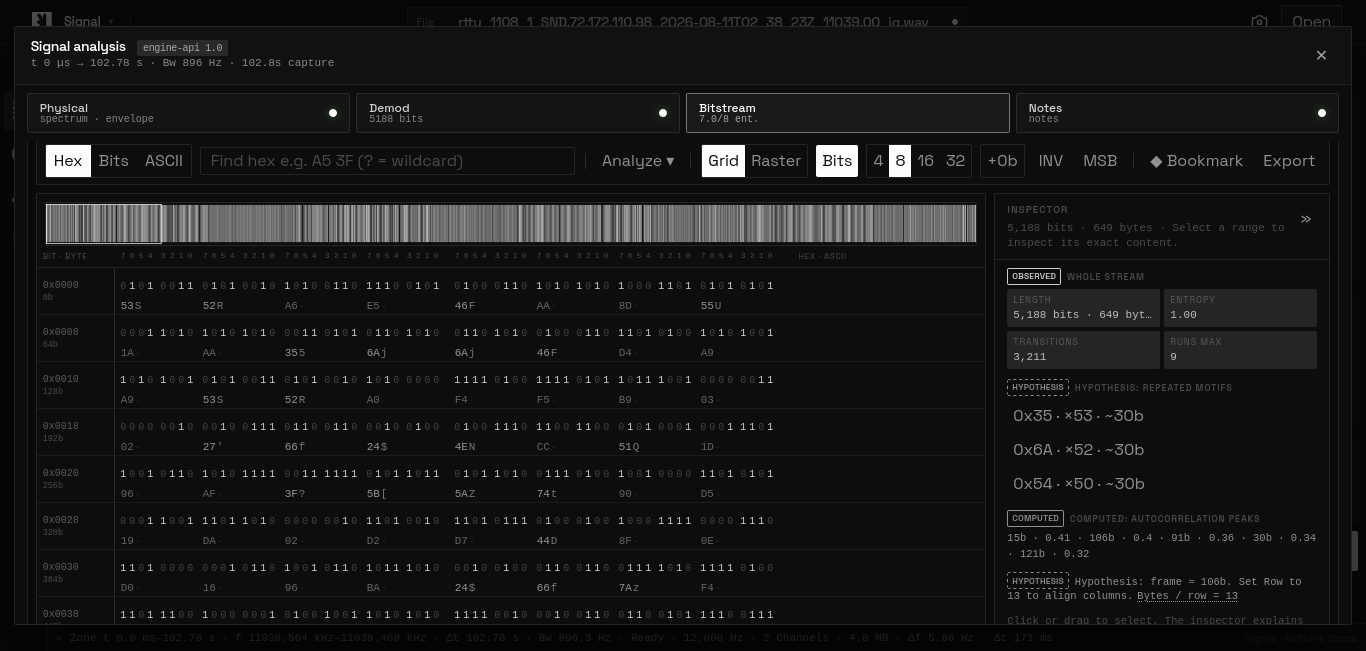
Inspect the bitstream.
Examine alignment, repetitions, patterns, entropy, hexadecimal, and ASCII.
Look for structure before looking for the protocol.
Who is it for?
- SDR
- Explore and characterize IQ captures.
- Radio & DSP
- Measure and compare signals.
- Reverse engineering
- Go from signal to bitstream.
- Research & teaching
- Work from reproducible measurements and observations.